West Haverstraw is a village of about 10,700 residents in the Town of Haverstraw in northern Rockland County, incorporated in 1883 and sitting close to the Hudson River where Haverstraw Bay — the Hudson's widest point — spreads out to the east. The area's history is industrial and Revolutionary in equal measure. Grist mills, rolling mills, and a calico printing factory operated along Minisceongo Creek as early as the 18th century; the Garnerville neighborhood within West Haverstraw takes its name from the Garner family whose textile printing operation anchored the local economy beginning in 1838. When the New York and New Jersey Railroad arrived in 1873, brickmaking became dominant, and brickyards eventually lined the Hudson riverfront. At dawn on September 22, 1780 — after British Major John André's clandestine meeting with Benedict Arnold aboard HMS Vulture — the conspirators completed their plans at Joshua Hett Smith's house in West Haverstraw before Arnold handed over the West Point fortification documents that set in motion the most famous act of treason in American history. A historical marker on Route 9W marks the site. Helen Hayes Hospital, the nationally recognized rehabilitation center now part of Montefiore Health System, sits on Route 9W in the village. Bowline Point Park on the Hudson River peninsula offers an Olympic-size pool, waterslides, and fishing piers with direct river views. And the Harbors at Haverstraw — a luxury riverfront condo and townhome development — has brought a new residential tier to the Hudson River edge.
Meridian Contracting has served West Haverstraw and the surrounding northern Rockland County communities for more than 25 years. We're a family-owned business based in Yonkers, about 20 miles south along the Hudson. West Haverstraw's housing is older and denser than most of the Rockland County communities in this project — late 19th and early 20th century homes in the historic village core, postwar ranches and colonials on surrounding streets, and the newer riverfront development along the Hudson. Hudson River ambient humidity from Haverstraw Bay is the defining exterior maintenance condition: it accelerates moss growth on shaded surfaces, promotes wood rot and paint failure faster than in drier inland communities, and produces more mortar damage per freeze-thaw cycle on masonry chimneys than the same winters would cause on more sheltered inland properties.

Full replacements for West Haverstraw's older village center homes and postwar colonials and ranches on surrounding residential streets.
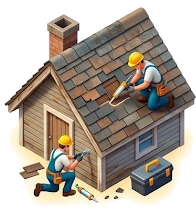
Leak repair, flashing, storm damage, inspections, and maintenance plans for West Haverstraw's older village center homes, postwar colonials, and Hudson River-adjacent properties.

Cleaning, installation, replacement, and guards for West Haverstraw's residential streets and older village center properties.
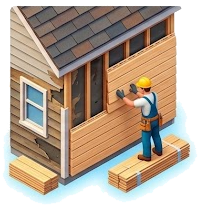
Wood, fiber cement, and vinyl siding for West Haverstraw's varied housing — with Hudson River humidity specifications on river-adjacent and riverfront properties.
Hudson River ambient humidity from Haverstraw Bay is the defining exterior maintenance factor in West Haverstraw. The river sits immediately east of the village, and Haverstraw Bay — the Hudson’s widest point — generates sustained ambient moisture that keeps exterior surfaces wetter between rain events than in drier inland communities. This accelerates moss and algae growth on shaded roof surfaces, promotes faster paint failure and wood rot on siding, and produces more mortar deterioration per freeze-thaw cycle on masonry chimneys. Properties along the riverfront and in the lower-lying portions of the village closest to the Hudson deal with the most direct exposure; the rest of the village deals with elevated ambient Hudson Valley humidity year-round.
West Haverstraw’s housing is older and denser than most Rockland County suburban communities. Late 19th and early 20th century homes in the village center have masonry chimneys now 80-130 years old, original rooflines with period flashing at active deterioration age, and wood siding or stucco exteriors that have accumulated maintenance history over a century of river-adjacent humid conditions. Postwar colonials and ranches on surrounding streets are at comprehensive replacement cycle age on original systems. The Garnerville neighborhood, with its own distinct character tied to the old calico printing industry along Minisceongo Creek, adds additional period housing stock to the village’s exterior maintenance landscape.
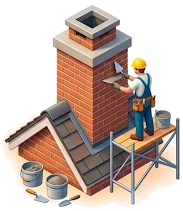
We provide full roof installation, replacement, repair, and maintenance across asphalt, metal, and architectural shingle materials, plus siding installation and repair, gutter and downspout services, soffit and fascia work, and chimney installation, repointing, cap, and crown repair.
Yes significantly — Haverstraw Bay’s river ambient moisture accelerates moss growth on roofs, promotes paint failure and wood rot in siding, and produces more chimney mortar deterioration per freeze-thaw cycle than in drier inland Rockland communities.
Yes — these 80-130 year old homes are among our more technically involved residential projects in the village, particularly for chimney repointing and period flashing work.
Yes. Meridian Contracting is fully licensed and insured throughout West Haverstraw and Rockland County.
No — commuters typically use Route 9W, the Palisades Interstate Parkway, and Rockland Coaches bus service to connect to the broader transit network.
Call us directly or request through our website. We’ll schedule a visit to your West Haverstraw property and provide a written quote.
With a nationwide footprint and a commitment to excellence, we proudly support families across the United States—helping them build, improve, and maintain the places they call home.
"*" indicates required fields